
Technology
The ecosystem behind the hardware.
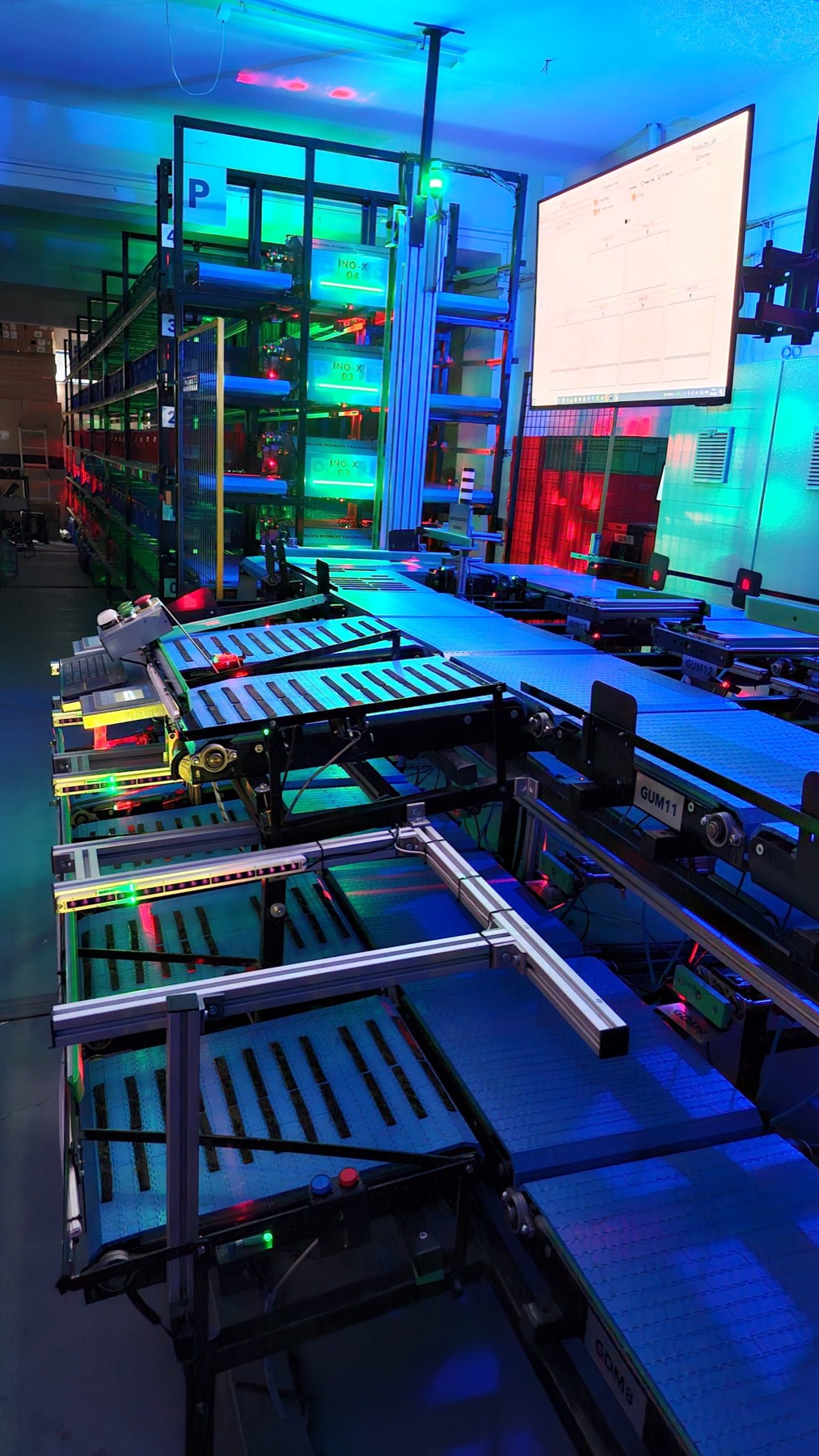
Shuttles, lifts, and conveyors are the visible part of an automated warehouse, but they are not what determines whether it performs. The software layer decides what moves, in what order, and what happens when something goes wrong. That layer is where Inlog concentrates its engineering.
-
01
AI-driven optimization
Slotting, retrieval sequencing, and station assignment are optimized against live demand rather than a periodic re-slotting exercise. The system adapts as the order pool changes through the day.
-
02
Intelligent fleet management
Shuttle and lift movement is coordinated to balance load across the grid, avoid contention, and keep stations fed at the rate they can absorb.
-
03
Warehouse orchestration
Storage, transport, picking, and sortation are sequenced under one control layer so handoffs between areas are timed rather than queued.
-
04
Robotics software
Motion control, safety interlocks, and fault handling run at the equipment level with deterministic behavior and full diagnostic visibility.
-
05
Digital twin simulation
Layouts and throughput are modeled against your real order profiles before installation, so capacity is validated on your data instead of on a reference case.
-
06
Real-time analytics
Throughput, cycle times, station utilization, error rates, and energy consumption are reported live and historically — by minute, hour, day, month, and year.
-
07
Predictive maintenance
SCADA monitoring across conveyors, sensors, motors, and PLC links surfaces developing faults early, so maintenance is scheduled rather than triggered by a stoppage.